


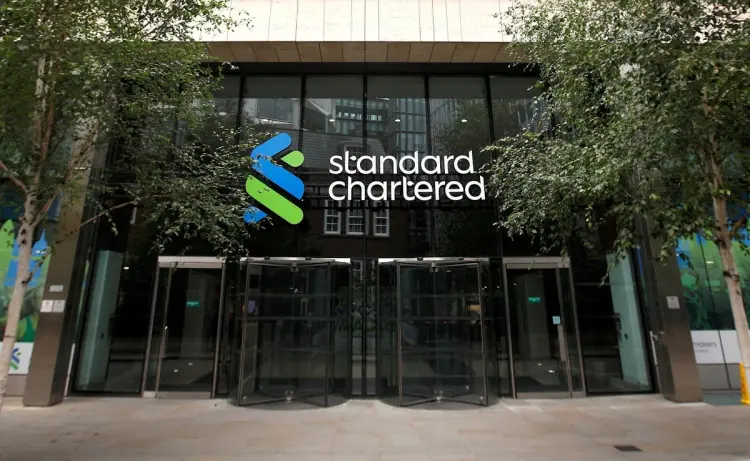
Standard Chartered, one of the world’s leading multinational banks, has announced that it is contemplating a strategic exit from its wealth management and retail banking divisions in Botswana, Zambia, and Uganda. The move comes as part of the bank’s broader plan to restructure operations and allocate resources more effectively in response to shifting market dynamics.
In a statement released on Wednesday, the London-based lender explained that these potential divestments would enable it to focus on “serving the cross-border needs of global corporate and financial institution clients” in the three African markets.
Strategic Realignment Across Markets
The announcement aligns with Standard Chartered’s global strategy of prioritizing high-yield sectors while scaling back traditional retail banking operations. The bank, which derives a significant portion of its profits from its operations in Asia, has increasingly emphasized its commitment to catering to affluent clients and multinational corporations.
Under its current restructuring plan, the bank intends to double its planned investment in its global wealth management business, dedicating $1.5 billion over the next five years. This investment will target high-growth markets and capitalize on rising demand for wealth management services among emerging affluent and high-net-worth individuals.
Africa Focus and Recent Developments
The bank’s decision to reconsider its retail operations in Botswana, Zambia, and Uganda reflects a recalibration of its African strategy. While Standard Chartered remains a prominent player in several African countries, it has gradually realigned its priorities to focus on sectors offering higher returns and alignment with its global corporate banking model.
This development follows the completion of the sale of Standard Chartered’s subsidiaries in Angola and Sierra Leone to Nigeria’s Access Bank. Access Bank, one of Africa’s largest financial institutions, announced on Wednesday that it had finalized the acquisition, further consolidating its regional presence.
The sale of the subsidiaries in Angola and Sierra Leone represents another example of how Standard Chartered is reshaping its African operations to focus on fewer but more profitable market segments.
Challenges and Shifting Dynamics in Retail Banking
Retail banking in Africa has faced mounting challenges in recent years, including increased competition, rising operational costs, and shifts in customer behavior. Digital transformation and the entry of fintech firms have disrupted traditional banking models, pressuring legacy institutions like Standard Chartered to adapt or pivot their strategies.
The potential divestments in Botswana, Zambia, and Uganda come as Standard Chartered seeks to streamline operations, optimize capital allocation, and focus on sectors that align with its growth ambitions.
However, the bank’s exit from retail banking in these countries may leave a void for local customers who have relied on its services. Analysts expect that local banks and emerging fintech players could step in to fill this gap, potentially fostering greater competition in the affected markets.
A Global Vision for Corporate Banking
Standard Chartered’s pivot to prioritize cross-border corporate banking aligns with its global vision to enhance connectivity for multinational clients. This approach leverages the bank’s extensive network across Asia, the Middle East, and Africa, allowing it to offer specialized financial services to international companies operating in multiple regions.
By focusing on this niche, Standard Chartered aims to solidify its position as a leading corporate and institutional bank, even as it scales back less profitable segments.









Leave a comment