


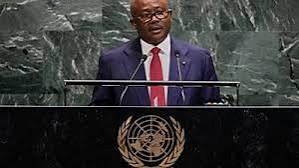
Guinea-Bissau’s military junta has blocked former President Umaro Sissoco Embaló from returning to the country, citing security concerns ahead of presidential and legislative elections scheduled for December 6.
The military high command said Thursday that an assessment of the country’s security situation found that the necessary conditions were not in place to guarantee Embaló’s return. It said the decision was based on national security, the preservation of public order and preventing developments that could threaten social stability.
Embaló, who has been living in exile in Morocco since being removed from power in a military takeover last November, had announced earlier this week that he planned to return to Guinea-Bissau and contest the December presidential election.
The former president was overthrown days after a presidential election in November 2025, before provisional results were announced. The military suspended the electoral process and established a transitional administration led by General Horta N’Tam.
The junta has set December 6 as the date for presidential and legislative elections, saying the polls are intended to restore civilian rule. N’Tam is barred from contesting the presidency under the transitional charter.
The military’s decision comes amid renewed security concerns in the country. Authorities appealed for calm earlier this week following reports of unrest within the presidential guard, including claims of dissatisfaction among troops after some personnel were transferred to another army unit. The authorities have not confirmed the reports of a broader security crisis.
The junta also reaffirmed restrictions on political demonstrations, gatherings and meetings, which were introduced after the military takeover. The restrictions remain in place as political parties and candidates prepare for the planned transition.
The decision creates another uncertainty for the electoral process. Embaló has said he intends to participate in the presidential contest, while the military administration has not indicated whether the restriction on his return will be temporary or whether it will affect his ability to contest the election.
Guinea-Bissau has experienced repeated periods of political instability since gaining independence from Portugal in 1974, including several coups and attempted coups. The country also faces longstanding economic and institutional challenges, while its location along the West African coast has made it vulnerable to international drug trafficking networks.
The latest dispute is therefore unfolding against a broader effort by the military authorities to manage a transition back to elected civilian government. Whether Embaló will ultimately be permitted to return and participate in the December elections remains unresolved.
For Guinea-Bissau, the handling of the former president’s return and the conduct of the planned elections will be important indicators of the transition’s direction and the country’s ability to restore a stable civilian political process.








Leave a comment