


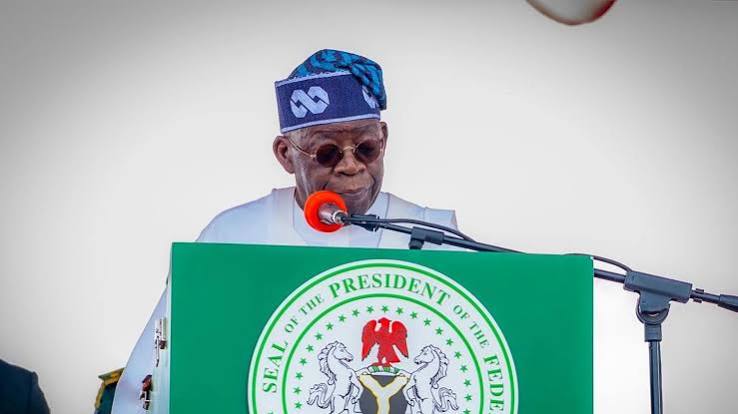
President Bola Tinubu’s economic reforms drew mixed reactions as Nigeria marked its 66th Independence Anniversary, with the administration pointing to improvements in key economic indicators while opposition figures, civil society groups and other stakeholders questioned whether the gains had translated into better living conditions for households.
In his Independence Day address on Thursday, Tinubu defended reforms introduced since he assumed office in 2023, including the removal of the petrol subsidy and changes to the foreign exchange system. He said the measures had corrected the direction of the economy and created a foundation for a new phase focused on shared prosperity.
Tinubu said the economy had grown by more than 4 percent in 2026, while inflation had fallen from its peak, foreign reserves had been rebuilt and the foreign exchange market had stabilised. He also said Nigeria recorded more than $6 billion in non oil export revenue in 2025. These figures were presented by the president as evidence that the reforms were strengthening economic stability.
The president acknowledged, however, that millions of Nigerians continued to struggle with food, education, healthcare and transportation costs. He said the next phase of government policy would focus on reducing the cost of living by lowering production and transportation costs, increasing agricultural mechanisation, improving access to farm inputs and investing in infrastructure.
Tinubu also pledged to prioritise job creation, industrial development and enterprise, particularly for young Nigerians. He said the government would expand digital connectivity, develop skills, improve access to finance and use Nigeria’s gas resources to support industrial activity.
The administration’s position has received support from some members of the governing All Progressives Congress. APC chieftain Olatunbosun Oyintiloye said the reforms had produced gains in areas such as inflation, foreign reserves and economic growth, while acknowledging continuing pressure on household purchasing power and the cost of living.
Opposition figures and civil society organisations offered a different assessment. Former Vice President Atiku Abubakar and other opposition voices argued that the reforms had increased economic hardship and questioned whether improvements in macroeconomic indicators were being reflected in household welfare.
The Lagos State chapter of the Peoples Democratic Party also said Nigerians were still dealing with high living costs, insecurity, unemployment and reduced purchasing power, and called for measurable improvements in household incomes and living conditions.
The National Human Rights Commission, Rule of Law and Accountability Advocacy Centre and Civil Society Legislative Advocacy Centre similarly said the success of economic reforms should ultimately be assessed by their impact on ordinary Nigerians, including access to basic needs, security, rights and economic opportunity.
The differing assessments reflect a central challenge facing Nigeria’s economic policy. Improvements in aggregate indicators such as growth, inflation, reserves and government revenue do not necessarily translate immediately into higher household purchasing power, particularly when prices remain elevated and incomes take longer to adjust.
Tinubu said his administration recognised the gap between economic reforms and household experience and pledged to strengthen social protection programmes, improve the National Social Register and expand access to education financing and consumer credit.
He also argued that many of the country’s economic problems predated his administration and could not be reversed within a single four year term. The government, he said, would focus on sustained growth and the creation of millions of productive opportunities.
As Nigeria enters its 67th year as an independent nation, the debate over the reforms is therefore shifting from whether major economic changes were necessary to whether they can deliver sustained improvements in employment, purchasing power, food affordability, public services and living standards.
The extent to which those outcomes materialise will remain a key measure of the economic programme as the Tinubu administration moves into the next phase of its agenda.






Leave a comment