


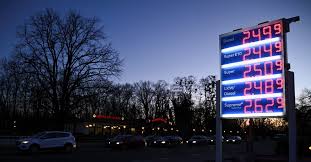
Germany’s lower house of parliament has approved initial measures to curb surging fuel prices that have been driven higher by the ongoing war in Iran, as global energy market disruptions continue to ripple through the economy.
Under the new plan, regulators will limit how frequently fuel retailers can raise petrol and diesel prices, aiming to temper rapid daily increases that have strained household budgets and business costs. The restriction mirrors similar rules in neighbouring countries, where efforts to restrict price volatility for consumers have been introduced amid rising global crude prices driven by geopolitical uncertainty.
The measures come against a backdrop of sharply elevated oil prices triggered by the conflict, which has disrupted shipping through the Strait of Hormuz and heightened fears of broader supply interruptions. That disruption has pushed Brent crude towards multi‑month highs and spurred widespread increases in pump prices across Europe.
Consumer confidence in Germany has also been hit, with recent surveys showing sentiment sliding as energy costs weigh on spending power and expectations of prolonged fuel price pressure grow.
Chancellor Friedrich Merz has acknowledged that public finances cannot offset all price increases, saying the most effective way to stabilise costs would be an end to the conflict in the Middle East. He has also discussed possible windfall taxes on energy companies to capture excess profits driven by the crisis, although legal and political challenges remain.
The government’s intervention seeks to protect consumers from sudden price spikes, but analysts warn that it may have limited impact if global energy markets remain volatile. As the crisis evolves, policymakers in Germany and across Europe are continuing to explore additional measures to mitigate the economic fallout from higher fuel and energy costs.








Leave a comment