


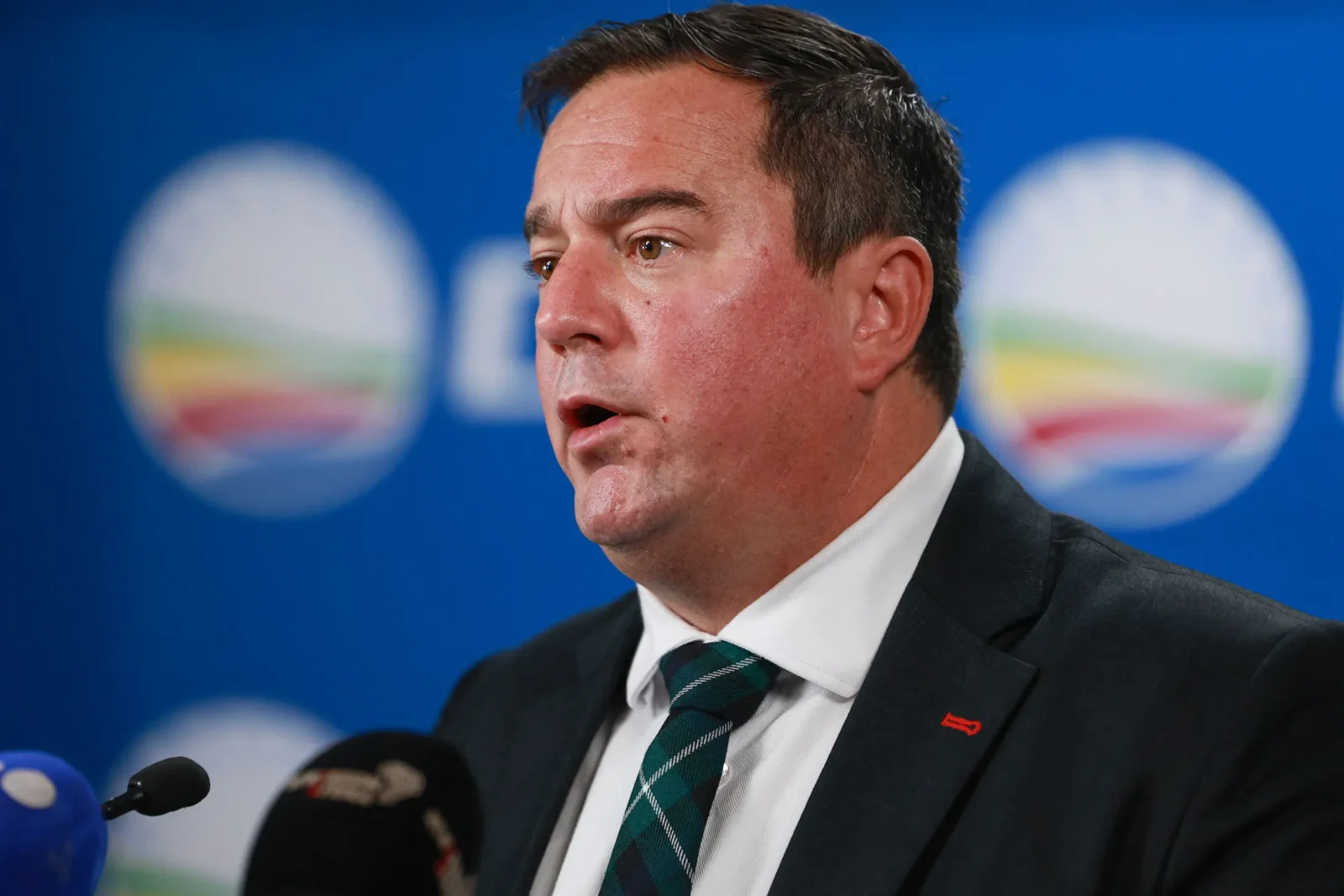
South Africa’s Democratic Alliance leader John Steenhuisen has announced that he will not seek re election as the party’s leader in April, a decision that could reshape the country’s political landscape and potentially threaten the stability of the current coalition government. The Democratic Alliance is South Africa’s second largest political party and a key player in national and provincial governance arrangements.
Steenhuisen confirmed his decision after consultations with senior party officials and structures, stating that leadership renewal was necessary as the party prepares for a new political phase marked by coalition negotiations, economic reform debates and evolving voter expectations. His departure opens the door for a competitive leadership race that analysts say could influence the party’s strategic direction and policy positioning.
Political observers note that the Democratic Alliance has played a critical role in coalition governance and opposition politics, often shaping discussions around economic policy, anti corruption efforts, service delivery and public sector reform. A leadership transition at this stage may introduce uncertainty within coalition arrangements, especially if competing factions push different political strategies or alliances.
Supporters credit Steenhuisen with strengthening the party’s national presence and expanding its voter base during a period of shifting political dynamics. Critics, however, argue that internal divisions and disagreements over campaign direction contributed to his decision to step aside. The coming months are expected to test the party’s internal cohesion as potential successors position themselves to take over leadership responsibilities.
Analysts believe the outcome of the leadership race could have broader implications for South Africa’s multiparty system, influencing coalition stability, parliamentary negotiations and the balance of power between governing and opposition blocs. With elections and policy debates on the horizon, the Democratic Alliance’s leadership transition is likely to remain a focal point in national political discourse.












Leave a comment