


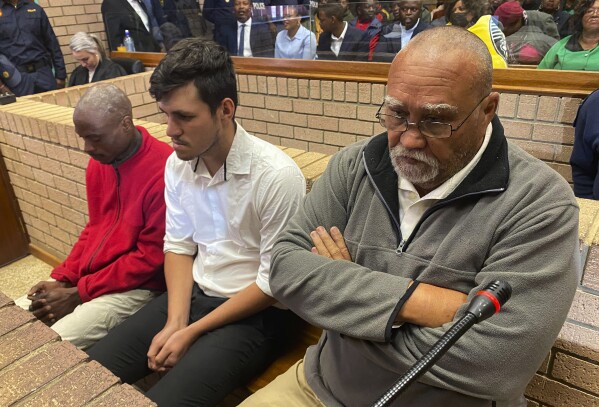
A high-profile murder case in South Africa has ignited widespread outrage and renewed scrutiny over deep-seated racial tensions in rural communities. Zachariah Johannes Olivier, a 60-year-old white farm owner from Limpopo province, along with his two employees, Adrian de Wet, 19, and William Musora, 50, stand accused of brutally killing two black women Maria Makgato, 45, and Lucia Ndlovu, 34, who were reportedly searching for food on the farm near Polokwane in 2023.
The accused allegedly shot the two women and attempted to dispose of their bodies by feeding them to pigs a horrific act that has stunned the nation and drawn attention to ongoing issues of racial violence and inequality, particularly in South Africa’s agricultural sector. In addition to the murder charges, the men face allegations of attempted murder for reportedly firing at Ms. Ndlovu’s husband, who was present during the attack, as well as charges related to possession of an unlicensed firearm and obstruction of justice.
The case has also placed a spotlight on immigration issues, as co-accused William Musora, a Zimbabwean national, is facing an additional charge under South Africa’s Immigration Act for allegedly residing in the country illegally.
As the trial opened at the Limpopo High Court, the courtroom was filled with relatives of the victims, human rights advocates, and members of the Economic Freedom Fighters (EFF) political party. The EFF has long criticized racial injustice in rural farming communities and has previously called for Olivier’s farm to be shut down. The proceedings are being closely watched across the country and internationally, as many see this case as emblematic of persistent racial divides that remain entrenched decades after the end of apartheid.
While the accused have yet to enter formal pleas, the severity and gruesomeness of the allegations have triggered intense debate on justice, race relations, land ownership, and economic disparities in post-apartheid South Africa. Legal analysts expect the case to test the country’s judicial system and its ability to deliver impartial justice in matters involving racial violence and power dynamics rooted in colonial history.
The trial continues amid growing calls from civil society and political groups for land reform, protection of marginalized rural populations, and accountability for racial violence in the agricultural sector issues that remain at the heart of South Africa’s complex journey toward equality and reconciliation.









Leave a comment