


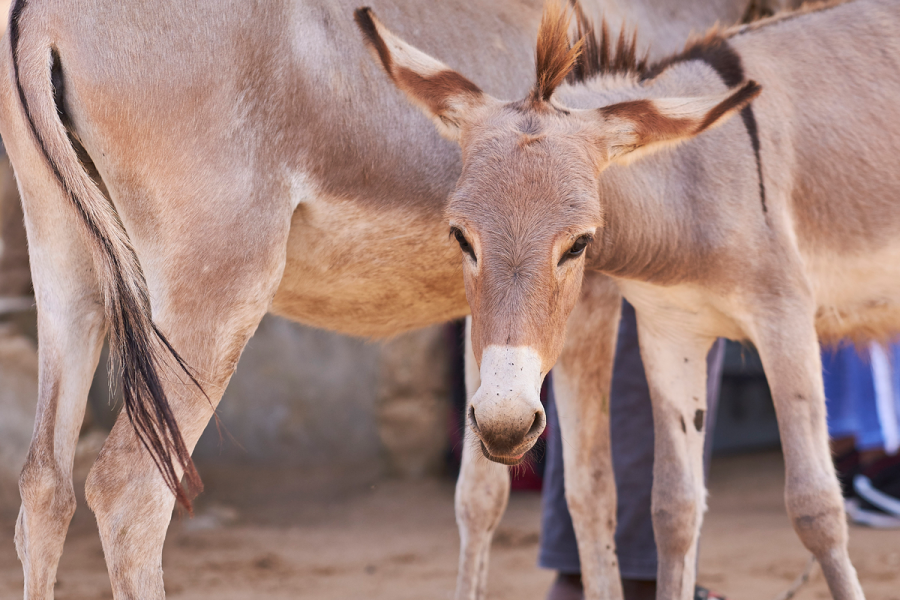
A traditional Chinese remedy has triggered a far-reaching crisis that few saw coming one centered around the humble donkey. Once taken for granted as a vital aid to rural life across Africa, donkeys have become the latest victims of globalized consumer demand, threatening women’s health, girls’ education, food security, and even social cohesion in vulnerable communities. Now, African leaders are implementing a continent-wide ban on the slaughter of donkeys for their skins, in a bid to stop the crisis at its source.
At the heart of this unfolding story is ejiao, a gelatin derived from donkey skin used in traditional Chinese medicine for its supposed anti-aging and fertility-enhancing properties. In recent years, ejiao’s popularity surged after being featured in a hit Chinese TV series, Empresses in the Palace. With China’s growing middle class driving consumption, demand soared to around 4–5 million donkey hides annually, nearly 10% of the global donkey population. But breeding donkeys is notoriously slow and difficult. When China’s domestic supply dropped from 11 million in the 1990s to just 2 million, global traders turned to Africa, which is home to nearly two-thirds of the world’s 53 million donkeys.
The trade grew rapidly, and with it came exploitation, cruelty, and chaos. Despite government efforts to regulate it, Africa’s donkey trade quickly became notorious for theft, inhumane slaughter, and black-market smuggling. Entire communities woke up to find their donkeys stolen or killed. Some estimates suggest up to a third of exported hides were sourced illegally.
The consequences have been severe and multi-layered. In rural Africa, donkeys are indispensable: they haul water, firewood, farm produce, and even children to school. For women, they reduce backbreaking labor and give them time for education or paid work. Without them, many families have seen their income shrink, their physical strain increase, and their children pulled from school to help with household chores. Prices of donkeys have skyrocketed, making them unaffordable to the very communities who depend on them most. In the wake of these losses, mental stress has risen and suspicion has fractured once-peaceful communities, with some people blaming neighbors for the thefts.
Beyond economic and social damage, the crisis has also ignited xenophobic tensions. In countries like South Africa, accusations of Chinese-backed criminal networks in the donkey skin trade have stoked online hate and racist commentary.
The African Union’s decision last year to ban the slaughter of donkeys for their skins represents a rare moment of united action, with governments, economists, animal welfare organizations, gender advocates, and religious leaders all joining forces. Officials are currently meeting in Côte d’Ivoire to finalize the ban’s enforcement across the continent. Yet the ban is already having ripple effects: as supply tightens in Africa, countries like Pakistan have seen donkey prices soar.
According to Dr. Lauren Johnston of the University of Sydney, who recently published a paper on the issue, the donkey skin trade offers a window into a broader, global problem resource overexploitation driven by rising consumer demand from emerging powers like China and India. What seems niche today can spiral into a geopolitical, humanitarian, and environmental crisis tomorrow.
The “donkey shock,” as some are calling it, is a cautionary tale of what happens when global trends intersect with local vulnerability. Whether it’s donkey skins, rare minerals, or forest products, the scramble for resources is intensifying and the world’s poorest often bear the brunt. Solving such crises will require swift international cooperation, regulatory innovation, and the unlikely alliances that helped fuel Africa’s ban. This is not just about saving donkeys it’s about safeguarding communities, futures, and a sustainable global balance.










Leave a comment