


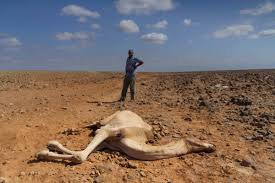
I have been reporting on climate change stories for nearly the entire month. It was not something I set out to do deliberately. It simply unfolded that way. A routine deployment to Kenya led me to Mandera town near the Kenya-Somalia border to cover what was expected to be a straightforward drought story.
At the time, there was little international attention on the worsening drought in the Horn of Africa. Coverage was sparse and the crisis barely featured in global headlines. I arrived expecting to document the familiar signs of water scarcity and environmental stress, assuming the situation would be serious but manageable. I was wrong.
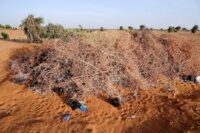
What I encountered in Mandera was far more severe than anticipated. The drought had hollowed out daily life. Rivers and water pans had dried up completely, livestock carcasses littered the landscape, and families spoke of walking for hours just to find a small amount of water. Many had lost nearly all their animals, wiping out their main source of food and income. For pastoralist communities, this loss was not just economic but existential.
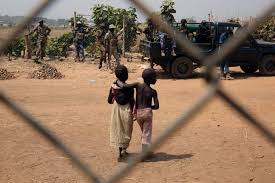
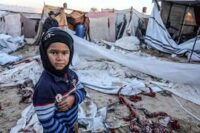
Children showed visible signs of malnutrition and health workers described rising cases of dehydration and preventable disease. Mothers spoke quietly about skipping meals so their children could eat. Schools struggled to stay open as families migrated in search of pasture and water. The drought was not an abstract climate statistic. It was immediate, personal and devastating.
What struck me most was how invisible this crisis felt beyond the region. While climate change is often discussed in terms of future risks, in Mandera it was already shaping survival itself. Repeated failed rainy seasons, rising temperatures and environmental degradation had converged into a humanitarian emergency that few outside the region seemed to notice.
That assignment reshaped my understanding of climate reporting. It was no longer about projections or policy debates alone. It was about people living through the consequences right now. The drought in the Horn of Africa is not a warning of what might come. It is a clear sign of what is already here.





Leave a comment