


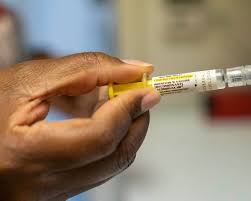
Guinea Bissau has suspended a United States backed hepatitis B vaccine study involving newborn babies, triggering serious ethical, medical, and political debate about how clinical research is conducted in African countries. The decision comes as the country’s health authorities ordered an emergency ethical review after discovering major procedural failures in how the trial was approved.
According to Guinea Bissau’s health minister, a six member national ethics committee that was meant to review and approve the study never formally met before authorization was granted. This revelation has raised alarm within the country’s medical community and among international public health experts, who describe the lapse as a critical breach of ethical standards, particularly given the vulnerability of the population involved.
The study was designed to randomly administer the hepatitis B vaccine to some newborns while deliberately withholding it from others, in order to track differences in illness, mortality, and developmental outcomes over time. Critics argue that such a design is deeply unethical because the hepatitis B vaccine is already proven to be safe and effective, and the disease remains widespread in Guinea Bissau. Hepatitis B is a major public health threat in the country, contributing to chronic liver disease, liver cancer, and preventable infant deaths.
Medical professionals and child health advocates say withholding a life saving vaccine from newborns in a high risk setting violates basic principles of medical ethics, including informed consent, beneficence, and non maleficence. They argue that research should never deny participants access to established, effective care, especially when safer alternatives for scientific study design exist.
The controversy has drawn the attention of the Africa Centres for Disease Control and Prevention. Senior Africa CDC leadership has publicly supported Guinea Bissau’s decision to halt the trial pending a full ethical review. The agency emphasized that all health research conducted on the continent must prioritize African public health interests, respect local regulatory systems, and uphold international ethical norms, rather than serve external agendas.
Despite the suspension, United States health officials have insisted that the study is still moving forward, a position that has further inflamed criticism. The project is funded through a 1.6 million dollar no bid contract awarded by the US government to a Danish research team. The team has previously been linked to controversial anti vaccine positions, and has reportedly received public praise from US Health Secretary Robert F. Kennedy Jr., whose views on vaccines have been widely challenged by the scientific community.
The trial was expected to involve approximately 14,000 newborns and follow them over a five year period, making it one of the largest infant vaccine studies ever proposed in the country. With the suspension now in place, the future of the project remains uncertain as Guinea Bissau’s authorities reassess both the ethical approval process and the scientific justification for the study.
The episode has reignited broader concerns about power imbalances in global health research, particularly the risk that African countries may be treated as testing grounds for controversial or poorly justified studies. Public health experts say the case underscores the urgent need to strengthen national ethics committees, improve transparency in international research partnerships, and ensure that African governments retain full control over decisions that affect the health and rights of their citizens.
As the emergency review proceeds, Guinea Bissau’s decision is being closely watched across the continent. For many observers, the outcome will serve as a critical test of whether African nations can assert ethical leadership in global health research and ensure that scientific progress never comes at the expense of vulnerable populations.











Leave a comment