


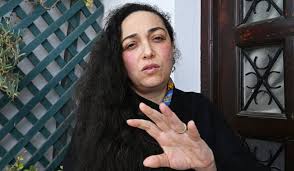
After more than twenty months in detention, Sherifa Riahi has been reunited with her family following her release from prison in Tunisia, bringing an end to a case that has drawn international attention and renewed debate about the treatment of humanitarian actors in the country.
Riahi, the former director of the French non governmental organisation Terre d’Asile, was freed on Tuesday alongside two colleagues after a Tunisian court handed down suspended sentences on charges of facilitating the illegal entry and residence of migrants. Speaking after her release, Riahi expressed relief but also reflected on the emotional weight of her imprisonment.
She described the most difficult aspect of her detention as the isolation rather than the physical conditions of prison. According to her, being cut off from her family, deprived of news from the outside world, and living with the fear of never seeing loved ones again took a profound psychological toll.
Beyond her personal experience, Riahi warned of what she characterised as the growing criminalisation of humanitarian work in Tunisia. She stressed that Terre d’Asile’s mission was solely to support asylum seekers and migrants in situations of extreme vulnerability, while also assisting Tunisian authorities in managing migration flows, which she described as an enduring and unavoidable reality.
Arrested in May 2024, Riahi has consistently maintained that she and her colleagues acted within the law. She noted that Terre d’Asile had operated in Tunisia since 2012 with the approval of state authorities, working closely with government institutions under formal agreements and receiving official commendations. Against this backdrop, she said, the decision to prosecute her remains difficult to comprehend.
Migration is an especially sensitive and politically charged issue in Tunisia, which serves as a key transit route for tens of thousands of migrants attempting to reach Europe each year. President Kais Saied has adopted a hard line on the issue. In February 2023, he warned that large numbers of undocumented migrants, many from sub Saharan Africa, posed a demographic threat to the country. Those remarks were widely criticised and were followed by racially motivated attacks that forced thousands of migrants from their homes and places of work.
Riahi’s release closes a painful chapter for her and her family, but it also leaves lingering questions about the future of humanitarian action in Tunisia. For aid organisations and civil society actors, the case has become a symbol of shrinking space and growing uncertainty in efforts to support some of the country’s most vulnerable populations.











Leave a comment