


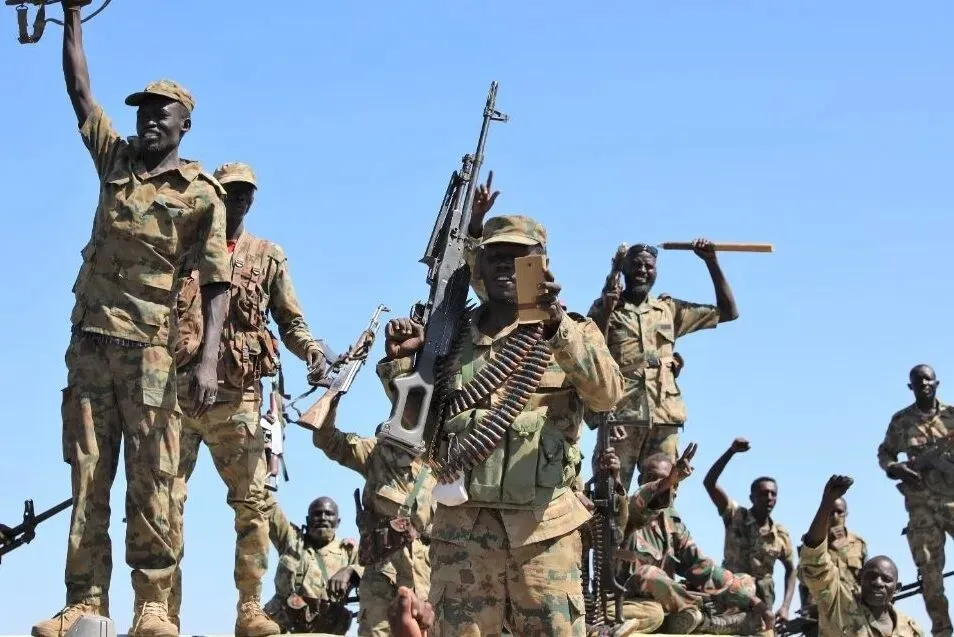
Sudan’s oil-rich Kordofan region has become the latest and most intense battleground in the devastating civil war between the Sudanese Armed Forces (SAF) and the paramilitary Rapid Support Forces (RSF), a conflict now in its second year and responsible for one of the world’s worst humanitarian crises. With an estimated 150,000 people killed and more than 12 million displaced, the war continues to unravel the fabric of the country while threatening to destabilize the broader region.
Strategically positioned and rich in natural resources, Kordofan divided into North, South, and West Kordofan, has become a major focus for both factions. According to analysts, whoever gains control of this region will effectively hold the keys to Sudan’s oil supply and territorial dominance. It’s a high-stakes struggle with regional implications, especially for neighboring South Sudan, whose oil exports rely on pipelines that pass through Kordofan.
The Sudanese army, under the command of General Abdel Fattah al-Burhan, launched renewed offensives in June to reclaim Kordofan from RSF control after suffering territorial losses earlier in the year. The SAF had recaptured Khartoum and Gezira state, and is now attempting to extend its influence westward toward Darfur the birthplace and stronghold of the RSF, led by General Mohamed Hamdan Dagalo, known as “Hemedti.”
While the SAF still controls key oil fields, such as Heglig in South Kordofan, the RSF has issued direct threats to escalate the conflict further, warning of attacks on oil infrastructure if airstrikes against civilians do not cease. Recent bombardments by the army in el-Fula and Abu Zabad have reportedly killed dozens, including children, and triggered harsh criticism from humanitarian agencies. The United Nations Office for the Coordination of Humanitarian Affairs (OCHA) condemned the strikes, particularly those that hit schools and shelters, saying they violate international humanitarian law.
The RSF, however, is also facing serious accusations of war crimes. The UN’s children’s agency, UNICEF, reported that over 450 civilians, including children and pregnant women, were massacred in recent RSF attacks in North Kordofan. These acts of violence have been described as a “terrifying escalation” and a “complete disregard for human life.”
Experts suggest that ethnic loyalties are influencing the RSF’s resilience in the region. Many of its fighters hail from the Misseriya ethnic group, which is native to West Kordofan, and are reportedly fighting to protect their communities. This dynamic complicates the army’s efforts to retake the region, raising the specter of a drawn-out and increasingly brutal conflict.
Despite the army’s nominal recapture of Khartoum, General Burhan has remained based in Port Sudan, a coastal city far from the front lines. His limited return to Khartoum underscores the precarious security situation, as the capital remains largely in ruins its presidential palace, airport, and much of its infrastructure reduced to rubble after months of street battles and airstrikes.
The situation in Kordofan has now drawn international concern not just for its strategic implications but for the growing humanitarian emergency it is fueling. The United Nations and human rights organizations continue to call for a ceasefire and the protection of civilians, but with both factions vying for control over oil and territory, hopes for peace remain slim.
As the conflict enters a more volatile phase, the battle for Kordofan could determine the war’s next chapter and whether Sudan can survive as a unified state or collapse further into chaos and fragmentation.






Leave a comment