


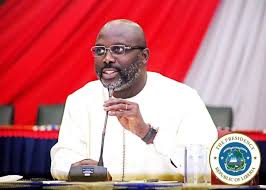
During a recent White House meeting, former U.S. President Donald Trump praised Liberian President Joseph Boakai for speaking “good English” and inquired about his schooling, seemingly unaware of Liberia’s deep-rooted historical connection with the United States. This exchange has sparked renewed interest in the long-standing relationship between the two nations one that is unique in Africa.
Liberia, located on the West African coast, was founded in 1822 by freed African-American slaves and liberated Africans rescued from transatlantic slave ships. It declared independence in 1847, becoming Africa’s first republic. The nation was closely tied to the American Colonization Society (ACS), an organization that aimed to resettle freed Black people in Africa. Ten of Liberia’s 26 presidents were born in the United States, and its political structure, legal system, and educational institutions were modeled heavily on American systems.
Liberia’s capital, Monrovia, was named after James Monroe, the fifth U.S. president and a key supporter of the ACS. Many streets in Monrovia still bear the names of American colonial figures, and the city’s early architecture closely resembles 19th-century American styles.
Even Liberia’s national flag closely mirrors that of the United States. Designed by seven African-American women, the flag features 11 red and white stripes and a blue square with a single white star, symbolizing Liberia as the first independent African republic. This resemblance is a visual reminder of Liberia’s American heritage.
Language also plays a significant role in the nations’ shared history. English is Liberia’s official language, and many Liberians speak with an accent known locally as “American Serees,” a blend of American English and Liberian Koloquoi. This may explain why Trump remarked on President Boakai’s fluency.
Additionally, cultural and familial ties between the two countries remain strong. A notable example is Timothy Weah, the U.S.-born son of former Liberian President and football legend George Weah. Timothy currently plays for Juventus in Italy and represents the U.S. national football team, continuing the legacy of transatlantic identity that defines Liberia’s unique place in African-American history.
Liberia’s enduring relationship with the U.S. serves as a powerful symbol of historical migration, shared values, and cultural exchange elements that continue to shape both countries’ diplomatic and societal landscapes today.




Leave a comment