


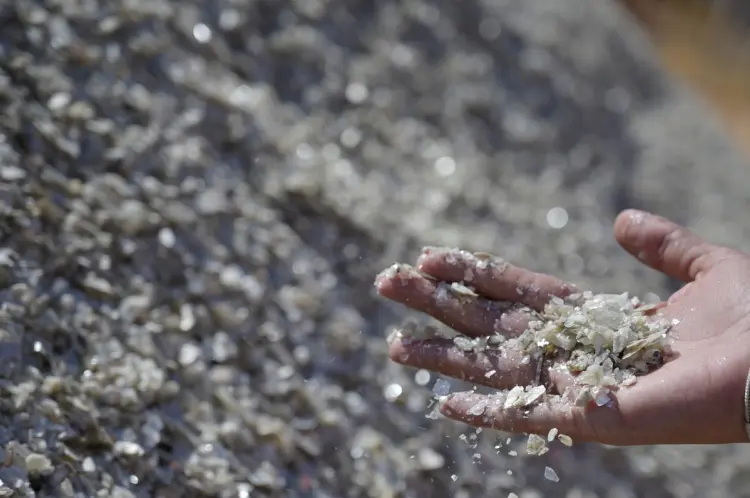
Nigeria’s plans to establish itself as a key player in the global supply chain for critical minerals, particularly lithium, have taken an unexpected turn with the involvement of a B2B e-commerce startup. Sabi, a Lagos-based company that specializes in the informal economy, is stepping up as a pivotal player in the country’s growing lithium sector. The startup has secured deals with two international companies, Snowball Holdings from Italy and Transition Resources from the United States, to develop lithium processing plants in Nigeria over the next year.
This collaboration highlights Nigeria’s broader ambitions to become a major exporter of lithium, a key component in the production of batteries for electric vehicles and other renewable energy technologies. The country’s rich mineral resources, including lithium deposits, have positioned it as an attractive destination for international investment in the critical minerals space, especially as the world shifts towards greener energy sources.
Anu Adasolum, CEO of Sabi, explained that the startup will act as a middleman between small-scale lithium miners and the two foreign companies, ensuring a steady supply of the mineral. “Sabi will guarantee a consistent stream of lithium from Nigeria’s small-scale miners and facilitate access to essential services like quality control and logistics for exporting the refined mineral,” Adasolum told Semafor Africa.
Sabi’s expertise in navigating Nigeria’s informal economy makes it well-suited for this role. The informal mining sector, while often overlooked, plays a crucial role in Nigeria’s overall mineral output. By working directly with these miners, Sabi can create an efficient value chain that connects them to the global market, helping to unlock the country’s lithium potential.
The partnership between Sabi, Snowball Holdings, and Transition Resources is expected to lead to the establishment of two lithium processing plants, each with an initial processing capacity of 500 tons per day. According to Adasolum, this capacity could be scaled up to 1,000 tons per day as operations expand. The refined lithium will primarily be exported to the US, though Europe, particularly Italy and Germany, is also being considered as potential markets in the future.
The significance of this development cannot be overstated. As the global demand for critical minerals continues to rise, particularly due to the energy transition, Nigeria’s ability to create a value-added supply chain for lithium could position it as a key supplier in the global market. This comes at a time when many countries are scrambling to secure reliable sources of critical minerals like lithium, cobalt, and nickel, which are essential for the production of electric vehicles, solar panels, and other renewable energy technologies.
Sabi’s involvement in Nigeria’s lithium sector is part of a broader strategy to boost the country’s industrial capabilities. By building local processing plants and ensuring efficient supply chains, Nigeria aims to move beyond simply being a raw material exporter. Instead, the country hopes to capture more value within its borders by refining and processing minerals domestically.
Beyond Nigeria, Sabi is also exploring opportunities in other African countries with abundant mineral resources. The company is looking into potential ventures in Zambia, focusing on copper, and Tanzania, where nickel deposits offer another avenue for growth. This regional expansion reflects the growing recognition of Africa’s critical role in supplying the world with essential commodities, particularly as the global economy shifts towards sustainable energy.












Leave a comment